Marissa Pangalos, Assistant Coach U18 – Women’s National Team & Captain Women’s National Team
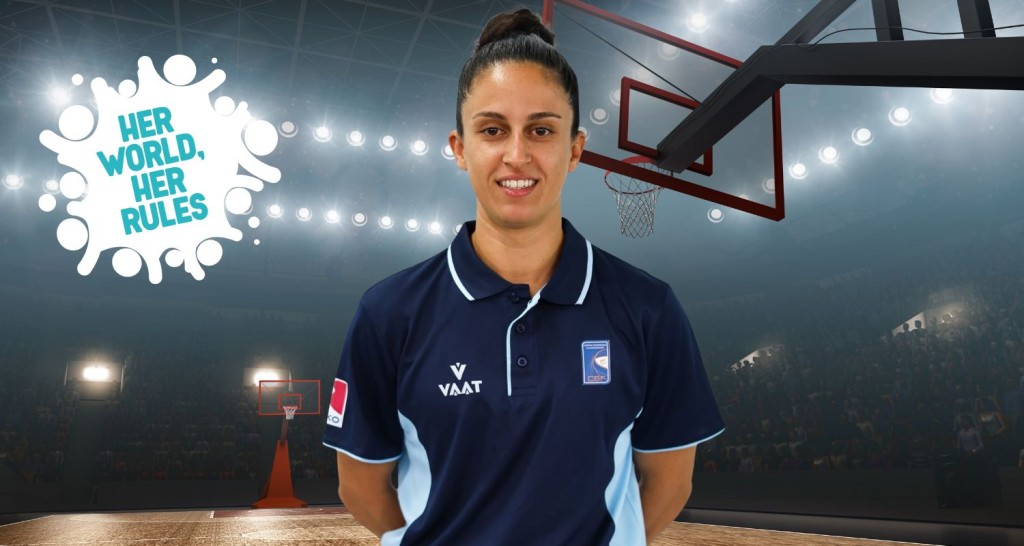
Marissa Pangalos is a professional basketball player and captain of the Cyprus Women’s National Team, with a career spanning more than 15 years across Cyprus, Greece, Italy, Australia, Germany and Sweden. She is also a certified coach, with experience in both the development of young female athletes and individual training. She is the Assistant Coach of the U18 – Women’s National Team. Her international experience has given her a unique perspective on how the position of women coaches differs from one country to another.
What challenges do women coaches face compared with their male counterparts?
The greatest challenge is credibility. As a woman, you often have to earn it continuously, whereas a male colleague is frequently granted it from the outset. I have experienced situations in which my decisions were questioned in ways that would not have happened with a male coach.
Access to senior coaching positions also remains unequal in many places. This becomes even more apparent when you have the opportunity to compare different countries and cultures, as I have done throughout my international career.
Have you ever experienced discrimination or bias as a woman coach? How did you deal with it?
Yes, but what I find particularly interesting is how much the experience differs from one country to another. In some of the countries where I have played and coached, I was readily given opportunities to take on senior coaching roles. People respected my knowledge and abilities without expecting me to prove myself every day.
In Cyprus, by contrast, I feel that I constantly have to prove my worth, whereas elsewhere that trust was given to me more readily. This showed me that discrimination is not inevitable; it is a matter of culture and mindset, which means that it can change.
I dealt with it by allowing my work and results to speak for themselves and by creating my own project, where I did not have to wait for anyone’s permission.
What can be done to encourage more women to pursue a career in coaching?
We need visible role models. Girls cannot imagine becoming what they have never seen. Personally, through programmes focused on the development of young female athletes, I aim to show them that it is possible to be a player, a coach and much more at the same time.
However, systemic changes are also necessary. We need structured mentoring, accessible training programmes and, above all, federations and clubs that offer women senior positions as readily as they do elsewhere.
What inspired you to become a basketball coach, and did your gender play a role in that journey?
My inspiration came from my journey as a player across so many different countries. I saw first-hand how differently a woman coach can be treated depending on where she is. This made me want to contribute to changing the situation in Cyprus as well.
My gender was not an obstacle to that decision. If anything, it helped me see the situation more clearly: when there are not enough women in coaching positions, you have two choices—to accept it or to become part of the change.


